About
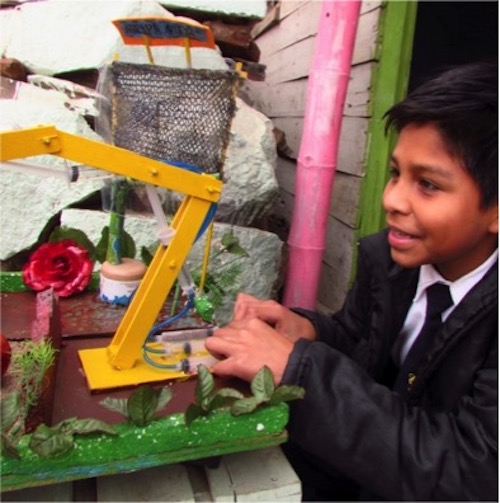
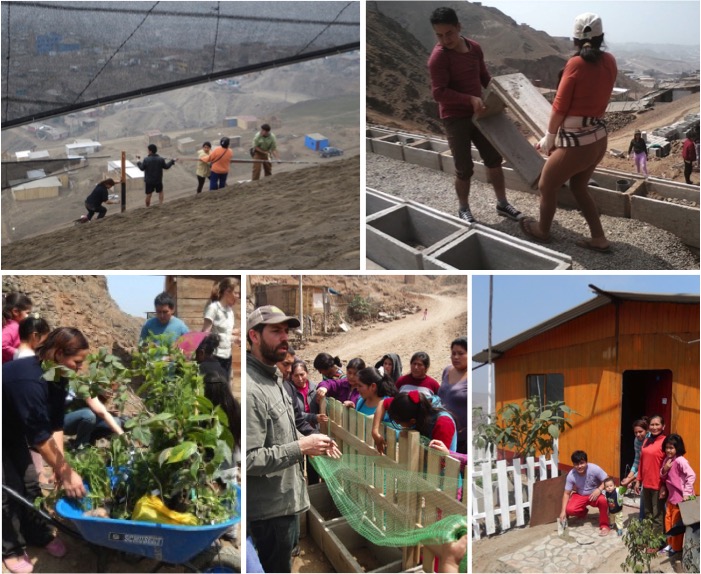
This series of participatory design-build interventions addressed some of the complex challenges faced by Eliseo Collazos, an informal urban community on the outskirts of Lima, Peru. Residents of the community, which includes 90 households, lacked access to green space, a reliable water supply, nutritious food, and other public health infrastructure. Community members identified the needs and priorities that defined the project, including water and food security, green space, safe footpaths, and play space. A series of phased landscape interventions were developed and implemented from 2013 to 2017, including fog collectors, water storage cisterns, a gravity-fed irrigation system, sports court, community garden, playground, and 60 household gardens.
Project Details
Description
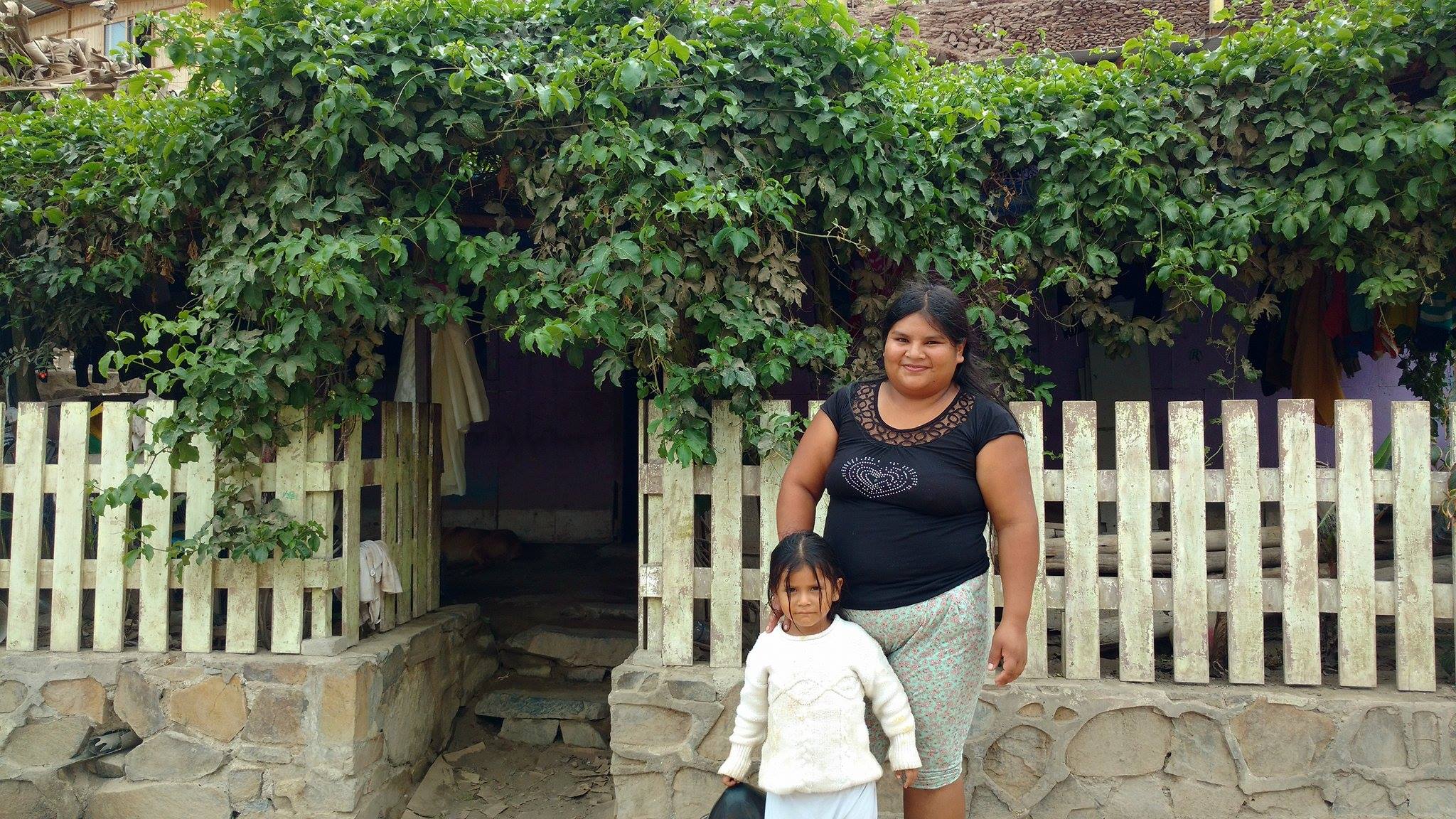
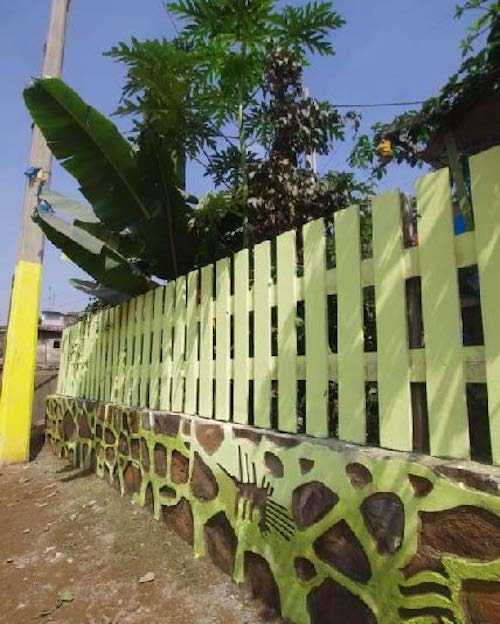
The Fog Water Farm-Park project was designed to address some of the complex challenges faced by Eliseo Collazos, an informal urban community located in the Lomas de Zapallal neighborhood of the Puente Piedra district on the outskirts of Lima, Peru. Community members identified their needs, defined the project that they wanted, and were central to decisions and design processes. The resulting interventions include improvements in water and food security, green space, safe footpaths, and play space.
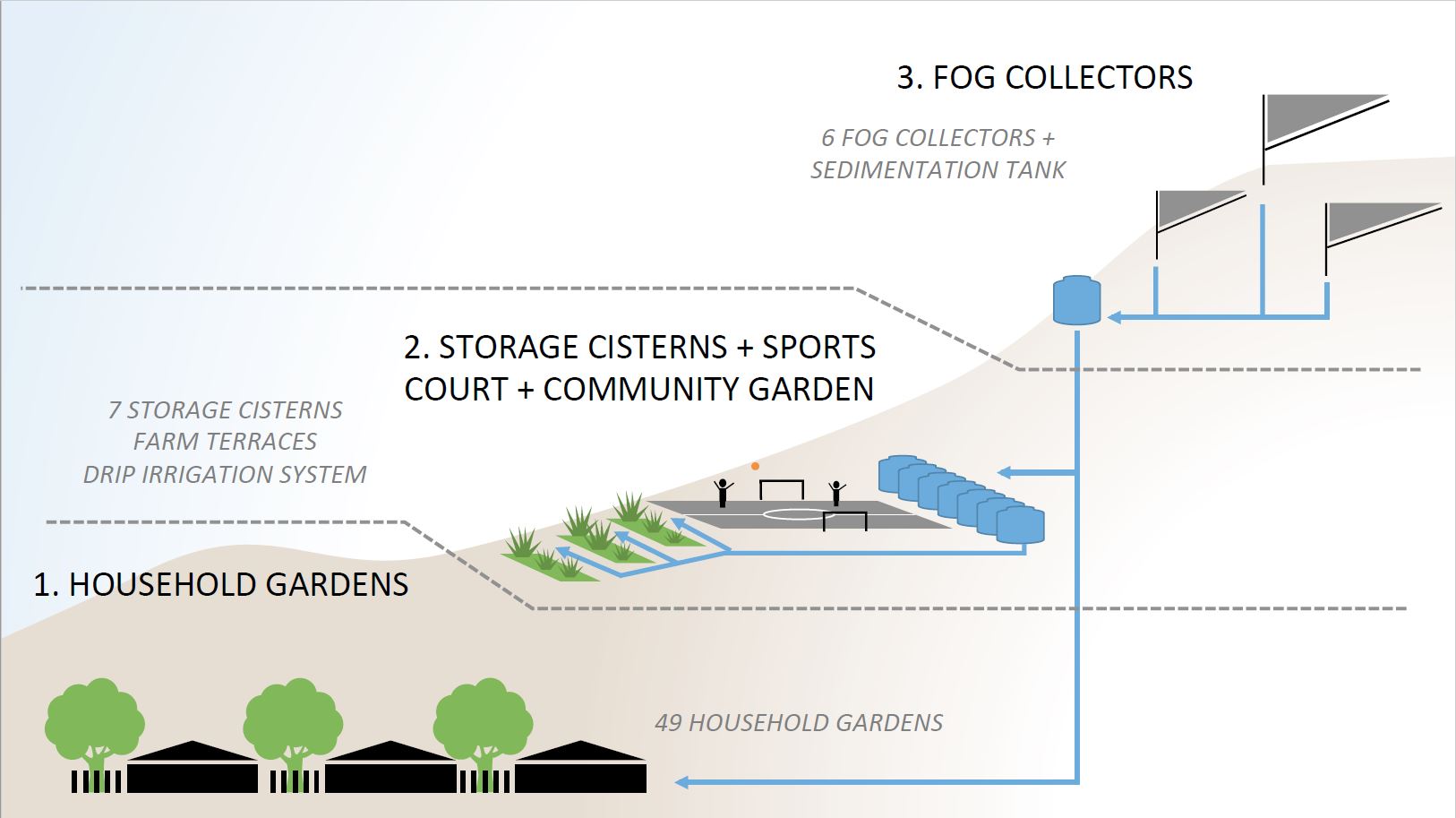
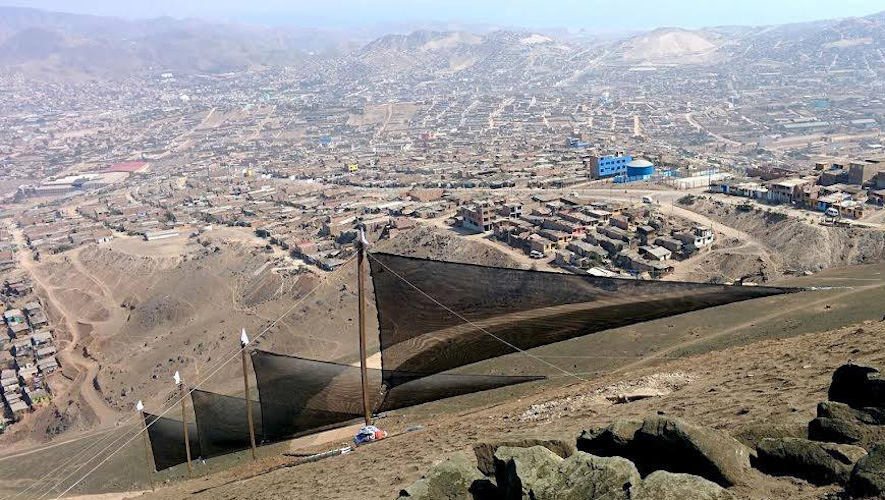
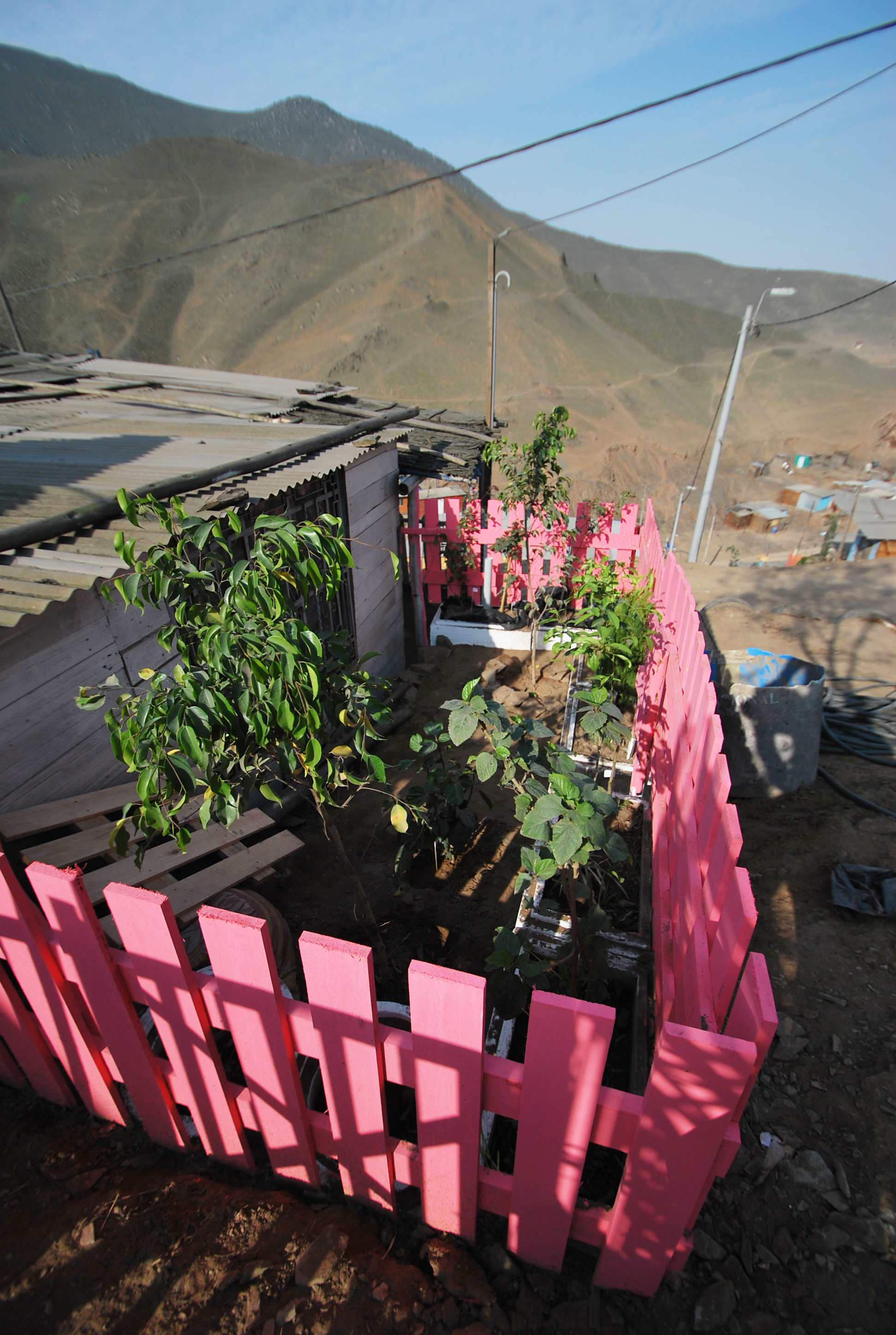
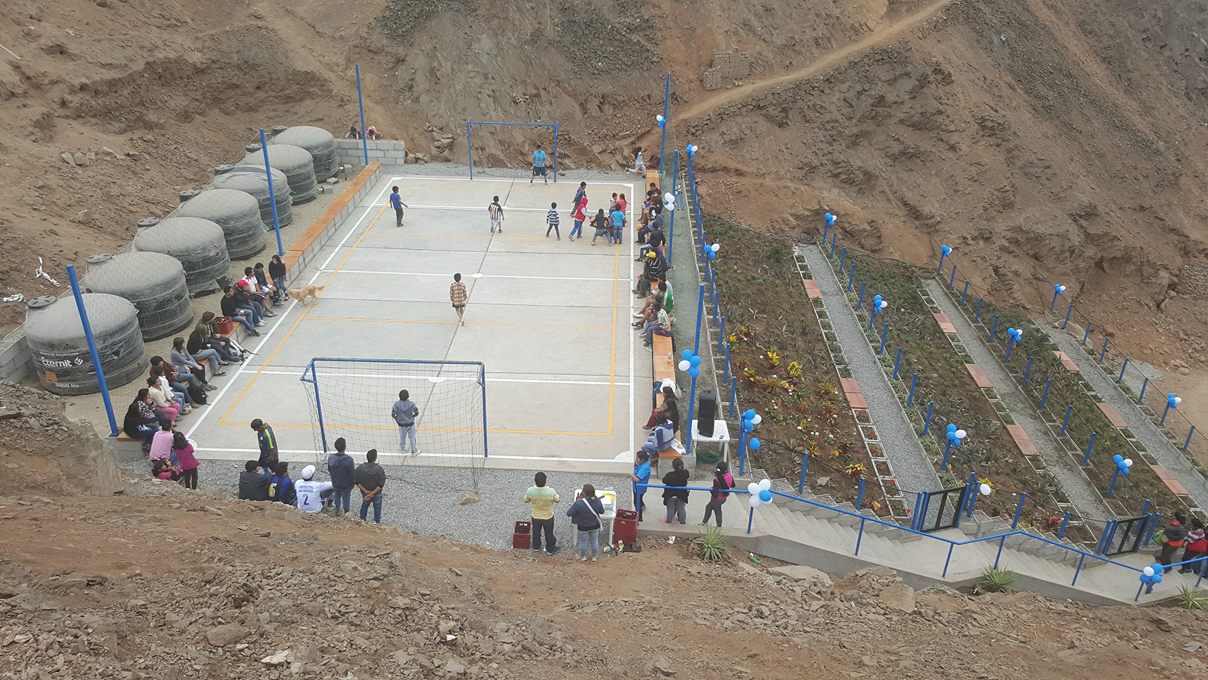
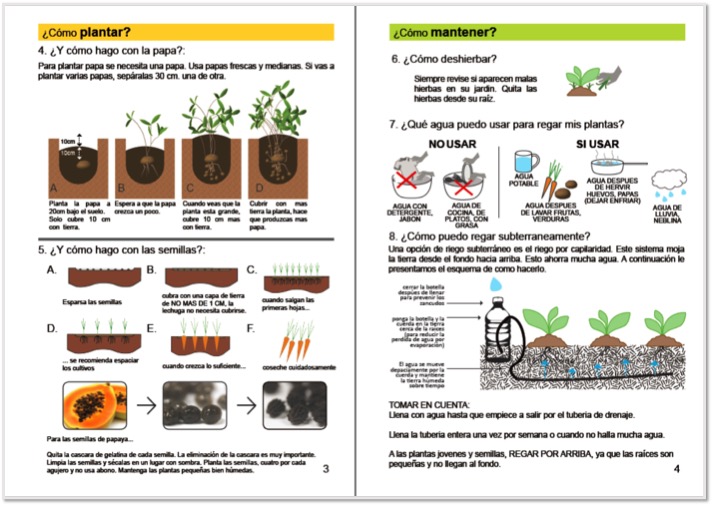
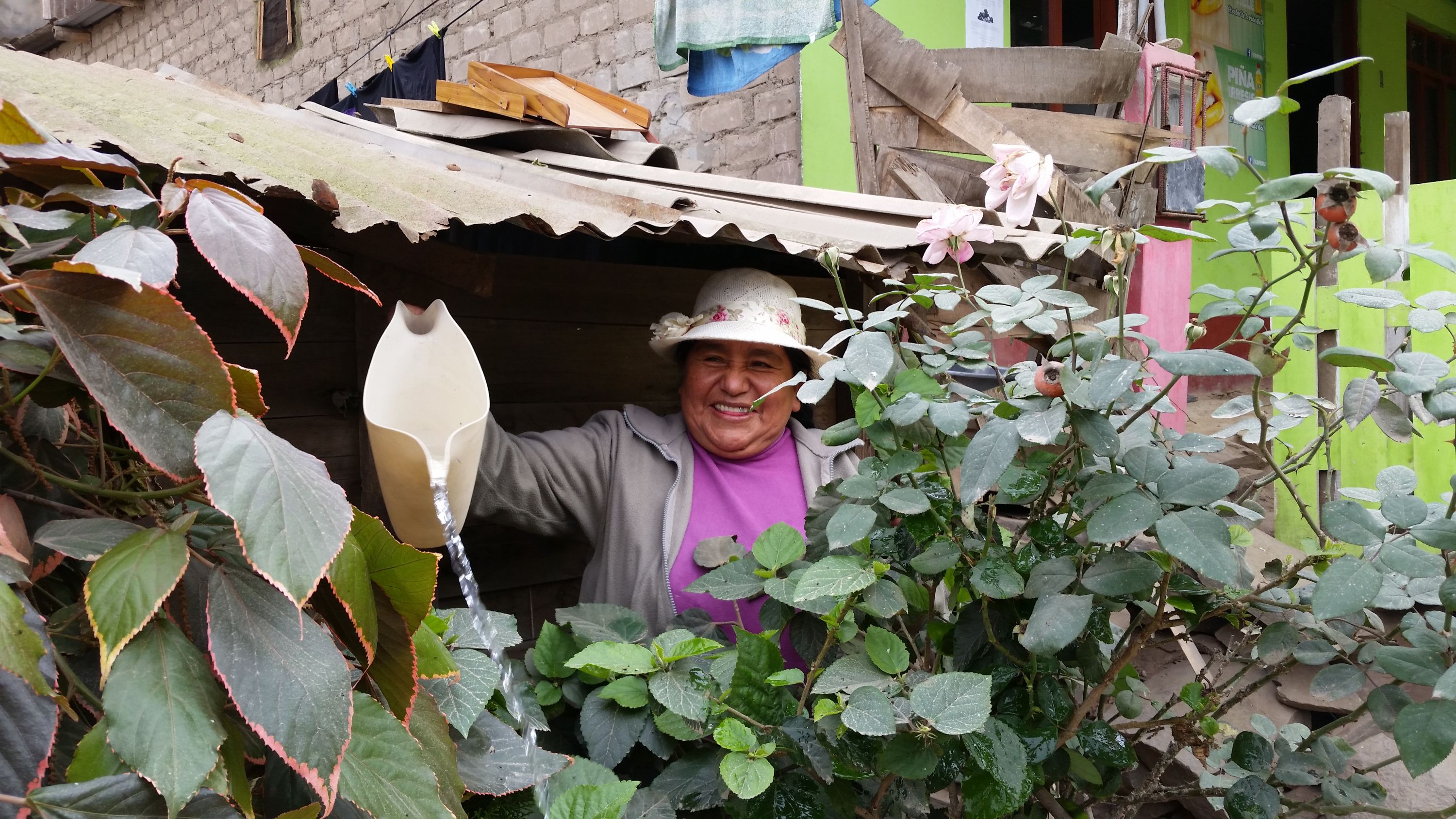
Taking advantage of a thick belt of fog that envelops the city for much of the year, the project included construction of a large-scale fog collection system, tanks to store water for irrigation during the dry season, and the addition of 60 household gardens. It also included the construction of a public park, including a play court, space for residents to gather and relax, and a series of garden terraces.
People living in informal urban communities like Eliseo Collazos face numerous challenges, including lack of public support for infrastructure, lack of land tenure, and institutionalized poverty. In addition to improving access to water, gardens, and safe spaces for play and recreation, the Fog Water Farms project has fostered a sense of agency and autonomy to residents.
Project Goals
- Improve access to food, water, recreation, and green space for informal community residents.
- Improve mental health and social well-being.
- Increase plant and animal life in a degraded ecosystem.
- Improve economic opportunity by providing public and private spaces to grow food.
- Support self-empowerment and community cohesion, amplify community voices, and increase touch points between the community and municipality.
- Provide distributed water infrastructure to reduce the reliance on municipal and private water sources, provide a sustainable water source in a coastal desert, and increase resilience to climate change impacts like increased severity of drought, rapidly melting glaciers, and accelerated loss of the native lomas ecosystem.
- Provide beautification.
- Promote education and skills-building for community members as well as project team members.
Reprinted from the original LAF LPS case study.
Social Benefits
- Increases time spent outdoors for 81% of 21 surveyed household representatives. 79% of 19 surveyed household representatives reported that their children spend more time outdoors because of the project.
- Fosters personal agency and stewardship, with 28 of the 29 households that participated in the first phase of household gardens adding new plants to their gardens of their own volition. These plants added by residents made up 45% of the 495 plants in the household gardens six months after construction.
- Improves interpersonal relationships, with 86% of 21 surveyed community members reporting that relationships and collaboration with their neighbors were improved by the project, while 65% of 23 reported that they spent more time with neighbors than before the project. This is supported by statistically significant positive change in social capital measured in a health assessment of participants.
- Promotes physical activity, with 67% of 21 surveyed household representatives reporting spending more time exercising or playing sports than before the project.
- Contributes to improved mental health and well-being for community members, with a statistically significant increase in psychological health based on a health assessment of 29 community members. Additionally, 95% of 20 surveyed household representatives reported that their home gardens improved their mental health, well-being, and happiness.
- Improves quality of life according to 100% of 19 surveyed household representatives. A health assessment of 29 community members showed a statistically significant increase in all quality-of-life domains including physical health (14.2% improvement), psychological health (7.7%), social relationships (11.9%), and environment (9.2%) in the course of one year.
- Improves community perceptions of the environment, with 6% of surveyed household representatives being happy with the environment in their community pre-project improving to 69% post-project. Additionally, 90% of 20 surveyed household representatives believed that their home gardens made the environment in their community better.
- Helps to combat declining perceptions of security in the community, with 96% of 21 surveyed household representatives reporting that security in the community either did not change or improved, despite an overall increase in crime in the region. The project also catalyzed significant increases in feelings of trust and safety and decreases in life-threatening experiences associated with home garden construction as indicated in a health assessment.
- Contributes to improved food security with 75% of 20 surveyed household representatives reporting that their home gardens improved their access to food. This provides the community with up to $250 worth of fresh fruits, vegetables, and herbs per month.
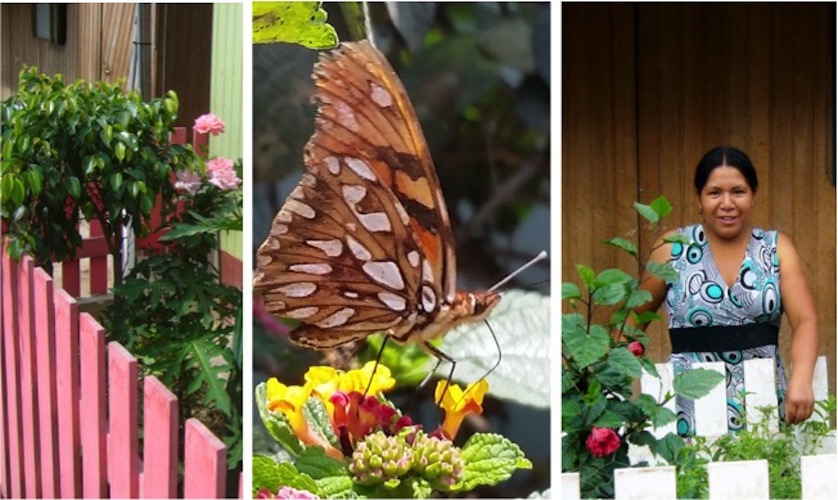
- Improves community beauty, with 100% of 20 surveyed household representatives reporting that their home gardens contribute to improved aesthetic quality.
- Enhances community satisfaction with access to green spaces, with 29% of surveyed household representatives being happy with their access to green spaces pre-project improving to 91% post-project. Additionally, 78% of 23 surveyed household representatives agreed that the fog collection system and community farm-park improved their access to green spaces.
- Increased green space per capita in the community of Eliseo Collazos from 0 to approximately 1.776 sq meters (19.12 sf), bringing the marginalized community about halfway to Lima’s average of 3.9 sq meter per capita and nearly one sixth of the way toward achieving the WHO-recommended 9 to 12 sq meters (41.98 sf) per capita.
Reprinted from the original LAF LPS case study.
Contact info@tractiondesign.org Traction Lomas de Zapallal Project
Project Team
Community of Eliseo Collazos
Traction (formerly known as the Informal Urban Communities Initiative, IUCI)
Architects Without Borders-Seattle
Robert Rauschenberg Foundation
University of Washington
Universidad Nacional Mayor de San Marcos: Instituto de Medicina Tropical, Daniel Alcides Carrión
Movimiento Peruanos sin Agua
US Environmental Protection Agency P3 Competition
NIH Fogarty Global Health Fellows: Northern Pacific Global Health Research Fellows Training Consortium
Landscape Architecture Foundation Olmsted Scholars program
Design + Research Team
Community of Eliseo Collazos
Coco Alarcón (Architecture, Landscape Architecture)
Brooke Alford (Landscape Architecture)
Leann Andrews (Landscape Architecture, Global Health)
Susan Bolton (Civil Engineering, Forest Resources)
Shara Feld (Civil Engineering)
Jill Fortuna (Landscape Architecture, Architecture)
Brian Gerich (Architecture, Landscape Architecture)
Taj Hanson (Landscape Architecture)
Leah Isquith-Dicker (Anthropology, Global Health)
David Judge (Architecture)
Abi Korn (Global Health)
Gayna Nakayo (Landscape Architecture)
Patrick Pirtle (Landscape Architecture)
Rekha Ravindran (Global Health, Public Health)
Francisca Salazar (Nursing)
Jess Smith (Civil Engineering)
Ben Spencer (Landscape Architecture, Architecture)
Joachim Voss (Nursing)
Coffman Engineers (Structural Engineering)
Total Cost
Budget: $90,623
Funder
Robert Rauschenberg Foundation