About
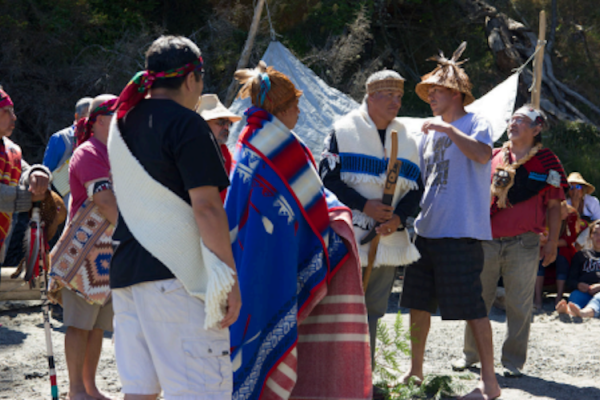
Whiteswan Environmental (WE) is an Indigenous-led nonprofit and co-founder of a Washington State charter school. Since time immemorial, our ancestors paddled, cultivated, harvested, and shared wealth through ceremony throughout the Salish Sea; today, WE reconnects our Saltwater Salmon People with ancestral village sites, camps, reef net teachings, and 13 Moons food systems through classroom and place-based learning as part of our work in truth and healing.
Program Details
Whiteswan Environmental (WE): Restoring Indigenous Kinship Through Truth, Healing, and Classroom-to-Place-Based Education reconnects Saltwater Salmon People with their ancestral homelands in the Salish Sea. Through 13 Moons learning, intergenerational teaching, and exercising inherent and treaty rights, WE returns youth, families, and communities to ancestral village sites, camps, reef net teachings, and Indigenous food systems that sustained Coast Salish Peoples since time immemorial. As co-founder of a Washington State charter school, WE integrates classroom-to-place-based learning into public education to balance Indigenous and Western ways of knowing. This supports knowledge democracy by honoring all peoples’ history, culture, governance, and language, enabling young people to learn who they are, where they come from, and how their relationships to land and water shape community health and identity.
WE’s programs address urgent community needs rooted in historical trauma, cultural erasure, land loss, and ecosystem decline. Our work reconnects people and places through land- and sea-based education, community-designed restoration, and practices of Truth, Healing, and Reconcili-ACTION. WE’s goals include restoring ancestral longhouse sites with Houses of Healing and Houses of Learning across the mainlands and islands—places where, as co-founder Suhunep Husmeen teaches, “There is a lifetime of curriculum in learning the old ways.” These efforts revitalize cultural identity, strengthen kinship ties, and foster intergenerational wellbeing while advancing ancestral food sovereignty restoration and protection across the Salish Sea bioregion.
WE’s leadership and partnerships have been recognized nationally and regionally, including a personal letter from President Barack Obama thanking WE for our shared commitment to putting children and the environment first, along with a copy of his Proclamation 8947 recognizing the rich Coast Salish history and reef net traditions of the San Juan Islands; a National Park Service Women’s History feature highlighting our work; and a letter from Secretary of the Interior Deb Haaland recognizing our co-founder’s significant cultural and historic connections to the San Juan Islands National Monument. Additional honors include the MLK Unity Award, the MIT Indigenous Communities Fellowship (SOLVER), and the 30 Under 30 Social Justice Award. Looking ahead, WE is advancing plans for a Coast Salish Tribal Heritage Field Institute—an Indigenous-led, 13 Moons, Mountain-to-Sea, Reef-to-Reef K–PhD educational pathway. Through these efforts, WE educates over 300,000 visitors annually about Coast Salish history, culture, governance, and language. This education is delivered through interpretive storyboards gifted during the San Juan Island National Historical Park Centennial, honoring the Saltwater Salmon People of the Salish Sea and their enduring relationship to their ancestral homelands.
Services Offered
- Classroom-to-place-based education grounded in the 13 Moons and Coast Salish knowledge systems
- Youth, family, and intergenerational learning experiences at ancestral village sites, reef net locations, and traditional food system places
- Cultural restoration education, including ancestral harvesting teachings, Indigenous food sovereignty, and seasonal practices
- Community-designed restoration and rematriation initiatives that lay the groundwork for future ancestral longhouse site restoration
- Truth, Healing, and Reconcili-ACTION programming addressing historical trauma, land loss, ecological decline, and cultural erasure
- Public education through interpretive storyboards at San Juan Island National Historical Park
- Educator professional development to support the integration of Indigenous knowledge, treaty rights, and place-based learning into classrooms
- Advocacy for recognition of Indigenous-led, place-based education as core academic learning aligned with state standards and Tribal sovereignty education
Contact Shirley L. Williams, Executive Director shirley.williams.we@gmail.com Whiteswan Environmental
Population Served
WE serves Indigenous communities, rural populations, and the broader Salish Sea bioregional community by addressing the root causes of trauma for both Indigenous peoples and the environment. WE also educates over 300,000 visitors each year on Coast Salish history, culture, governance, and language through partnerships at ancestral village sites and national parks.
Cost to Participate
All WE programs are offered at no cost to participants. As an Indigenous-led organization restoring cultural and land-based learning, WE ensures that youth, families, Elders, and educators can participate fully regardless of ability to pay. Program support is provided through grants, partnerships, and community allies.
Staff Composition
WE is an Indigenous-led collective that engages cultural educators, Elders, Knowledge Keepers, youth mentors, and community practitioners within contracting or staffing frameworks required by current nonprofit and employment systems. Although Public Law 113–168 affirms that cultural and ceremonial knowledge transmission is not to be treated as compensation for services, Indigenous educators are still often required to operate within these Western structures. WE names this truth to help educate partners and to support the restoration of culturally aligned pathways for transmitting Coast Salish knowledge across the Salish Sea.
Research Connections and Publications
This is Whiteswan Environmental’s first published case study and reflects our commitment to community-based learning grounded in Indigenous knowledge, place-based education, and ecological restoration. WE has been featured in published articles and is engaged in community-led research partnerships. WE’s work and leadership appear in the National Park Service Women’s History series, in MIT Solve’s Indigenous Communities Fellowship network through our Digital Ecocultural Mapping project, and on the MIT PKG Center’s community partner site—all reflect opportunities for collaboration around place-based learning, data sovereignty, and 13 Moons curriculum development.
WE also completed an Institutional Review Board (IRB) application through Northwest Indian College, which was approved to support culturally grounded, community-led research connected to ancestral village site education and classroom-to-place-based learning. Although approved, the research was not implemented due to structural considerations that can arise when advancing community-based learning and research within complex governance and cultural contexts.
WE’s leadership has additionally been highlighted in the Northwest Area Foundation’s article on grantee-led systems change and in journalism covering cultural restoration efforts in the San Juan Islands. This includes stories about the installation of story boards at an ancestral village site and increased access to Lummi ancestral lands. Earlier work featuring Shirley Williams appears in HazNet, which profiled Indigenous approaches to community resilience and land-based healing.
National Park Service
Read: Shirley Williams – San Juan Island National Historical Park
MIT Solve
Read: WE - Digital Ecocultural Mapping Project
Northwest Area Foundation
Read: How Grantee-Led Systems Change Is Evolving Our Funding
Haznet
Read: Inspiring Resilience: A Reflection of Indigenous Public Health and our Chi’lange’lth
ICT News
Read: ‘Watershed Moment’: Pole, Story Boards Installed on Ancestral Village Site
ICT News
Read: Ancestral Land Made Available For Lummi Nation’s Use